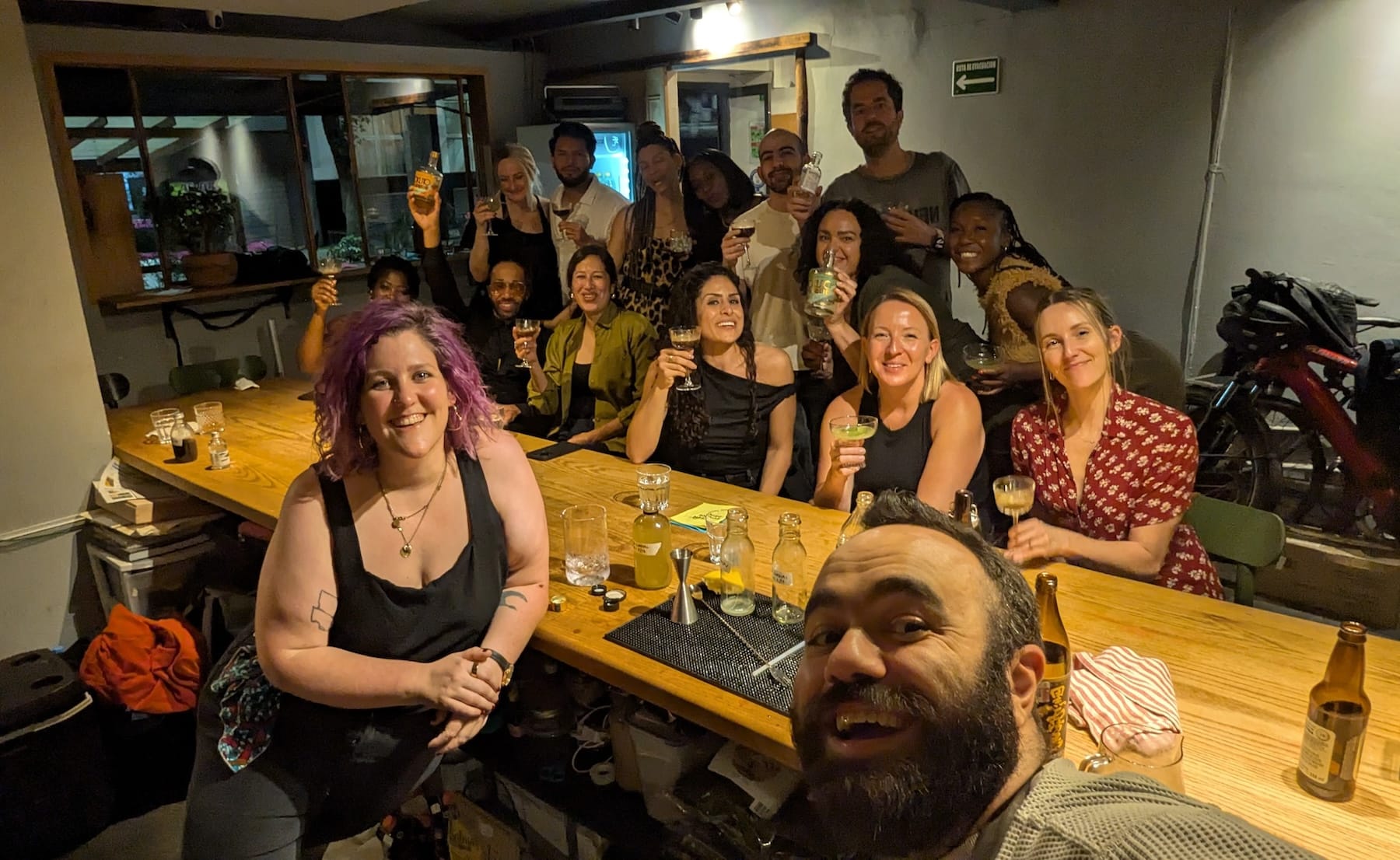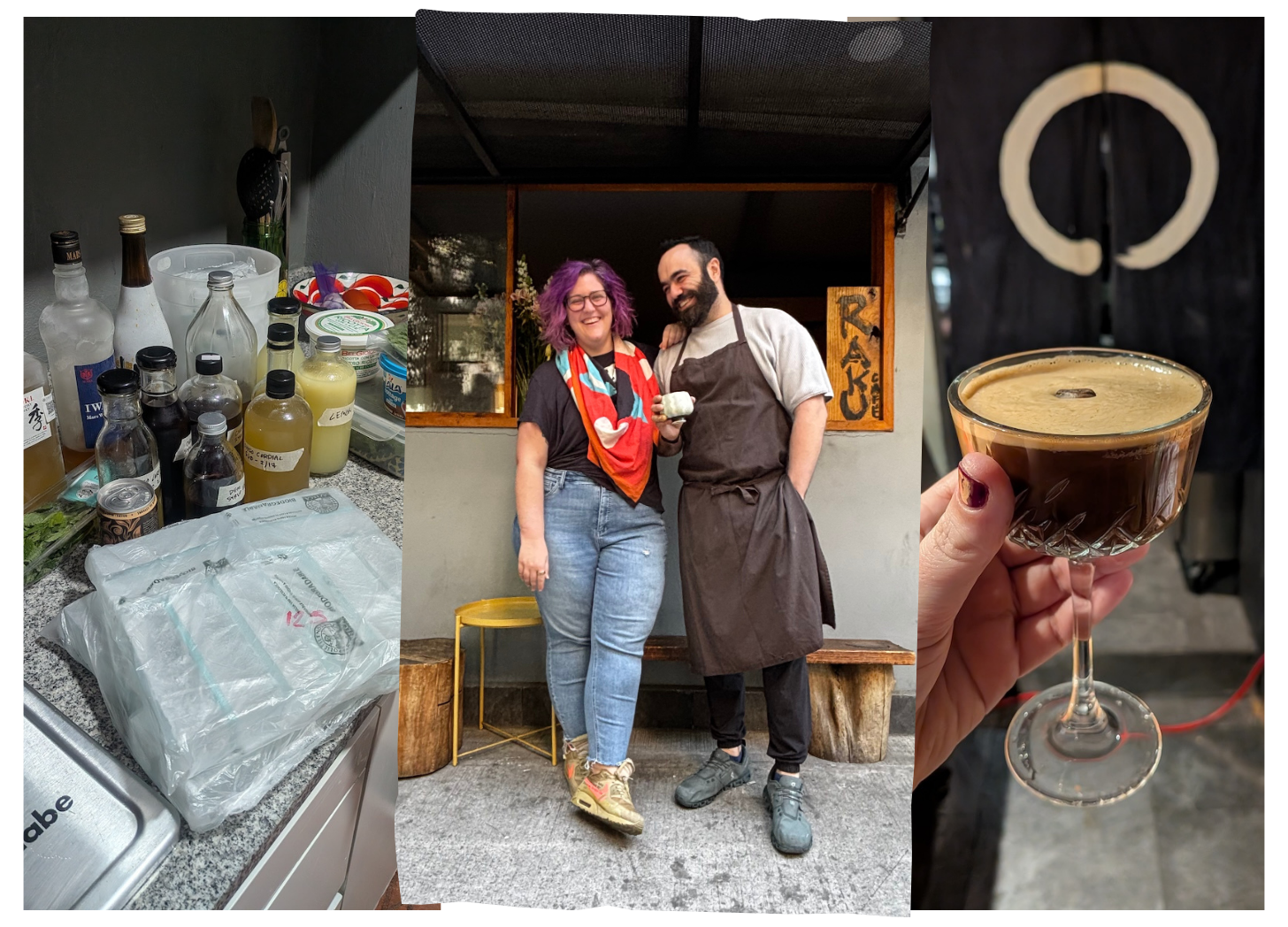
I hosted a little pop-up bar in CDMX this week.
It was part cocktail club, part season finale party, all good times. Lots of my favorite people showed up! I even ran out of drinks. 😅
"Pop-ups" are an established thing in the bar industry, but they're normally brand-sponsored and hosted in actual bars.
My version of a "pop-up" is a little different so I thought I'd share a little about what goes into one...
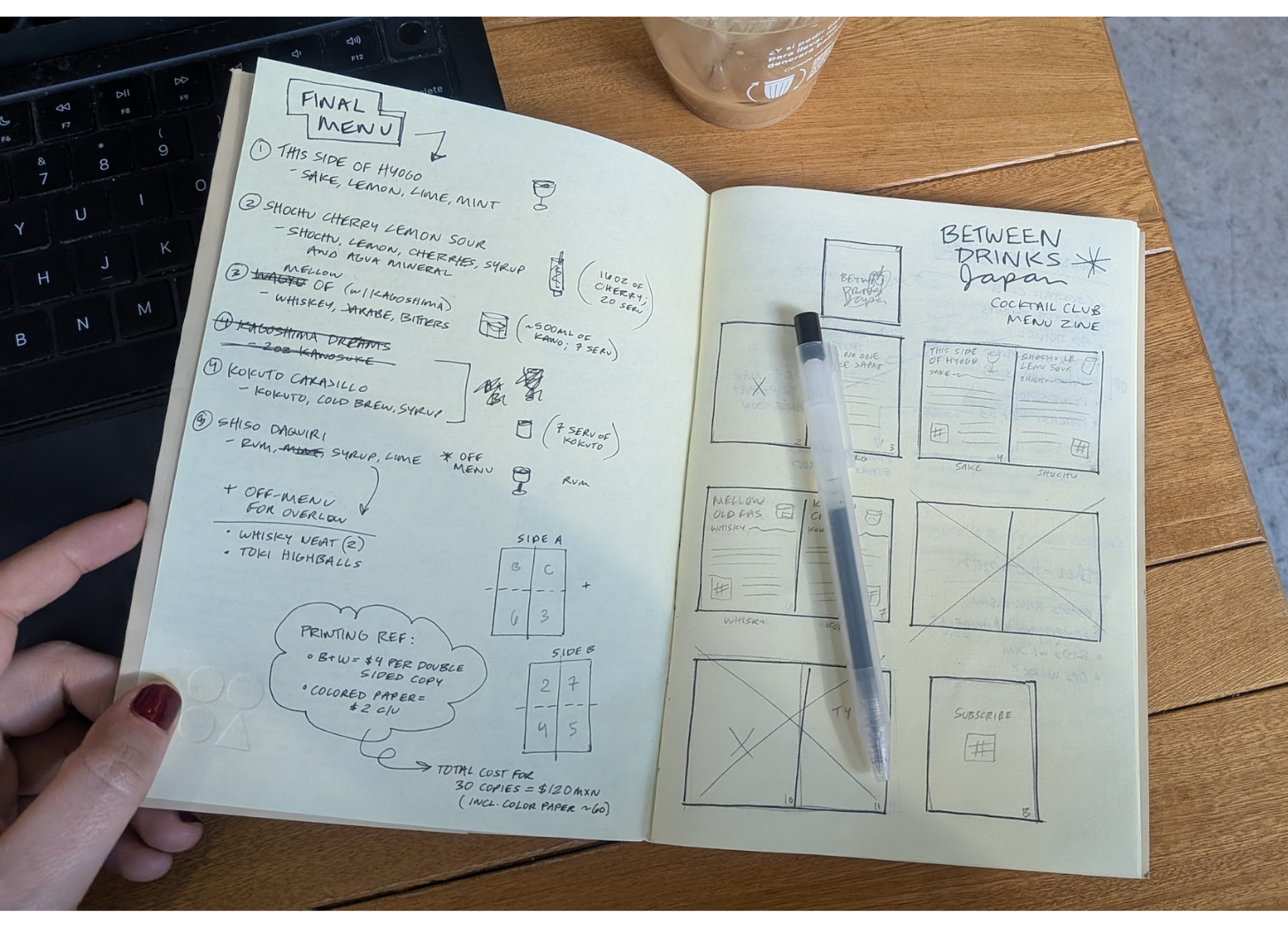
Menu Development
I'm all about the spirits so that's where I always start—a list of 3-4 specific bottles that fit the theme. From there, I think about the flavors and formats that work best for each one.
Every menu should be a balance—not too heavy on one spirit or flavor profile and, since I only do 4-5 drinks total, I don't like to double up on formats either.
My usual menu is something like this:
- A shaken drink served up that's easy to batch
- A highball built in the glass
- A shaken drink served on the rocks
- A strong, stirred drink
- A coffee or dessert cocktail
I don't do any straight-up classics, but most of my drinks are just riffs on classics. (Or drinks I had once that stuck with me.)
I try to start with five because one inevitably gets cut. Sometimes there's an unexpected hiccup with supplies or cost. Other times, the prep ends up being too intensive to make sense at this scale.
Drink development
Once I have my ideas, I have to, you know, test them. 😅
Some drinks start with a relatively finished recipe that I just need to tweak. Other times, I have an idea or element I want to use and I need to figure out how to best see it through.
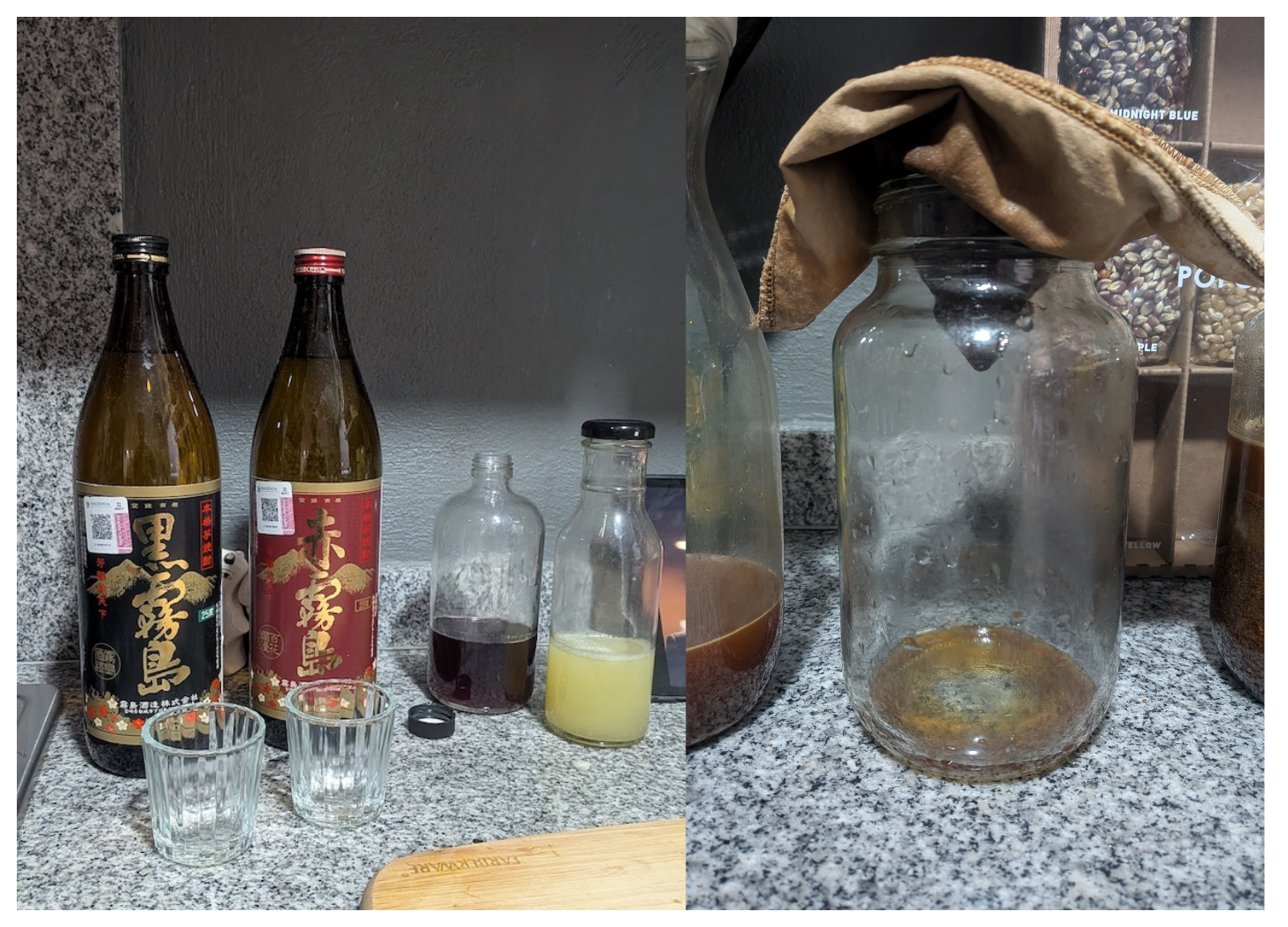
For example, I knew any Japanese-inspired menu had to have a Shochu Lemon Sour but I also didn't want to just serve a standard one.
My favorite thing about shochu is that it's made with whatever is grown nearby so I started thinking about other types of produce I could showcase in the drink. I was using a shochu made from sweet potatoes so maybe I should bring out that flavor more? Or something sweet to play off the tart lemon?
I eventually landed on cherries because (a) I liked the lemon/cherry flavor profile and (b) cherries are grown in northern Japan. It's the opposite side of the country from shochu production, which mostly happens in the southwest.
I like that, together, sweet potatoes and cherries represent the diversity of Japan's crops from coast-to-coast. Which is also what I like about shochu!
Every cocktail club includes a little background on the drink, so this recipe gave me a great entry point to talk about the cultural ubiquity of a Lemon Sour, but also what makes shochu so unique.
Finalize recipes
My spirits and ingredients come from all over—local supermarkets and liquor stores, but also specialty shops, and even Amazon. I'm paying full retail prices for nearly everything. And that's when I can find it!
Case in point: shochu.
Japan's national spirit is impossible to find in CDMX. (I've tried!) And even online, there is one brand that will ship to me and only via Mercado Libre.
That's it: one brand, two varieties. Those are my options for shochu. And thankfully they're good! But you see what I mean about availability.
Sometimes, I go through all the work of planning and testing recipes... only to find out that one distributor is sold out and I have to pivot last minute.
This time, I kept going to stores that were sold out of Nikka whisky and eventually someone told me that they just changed Mexican distributors and there's no ETA on when they'll be back in stock. 🙃
Scale up recipes
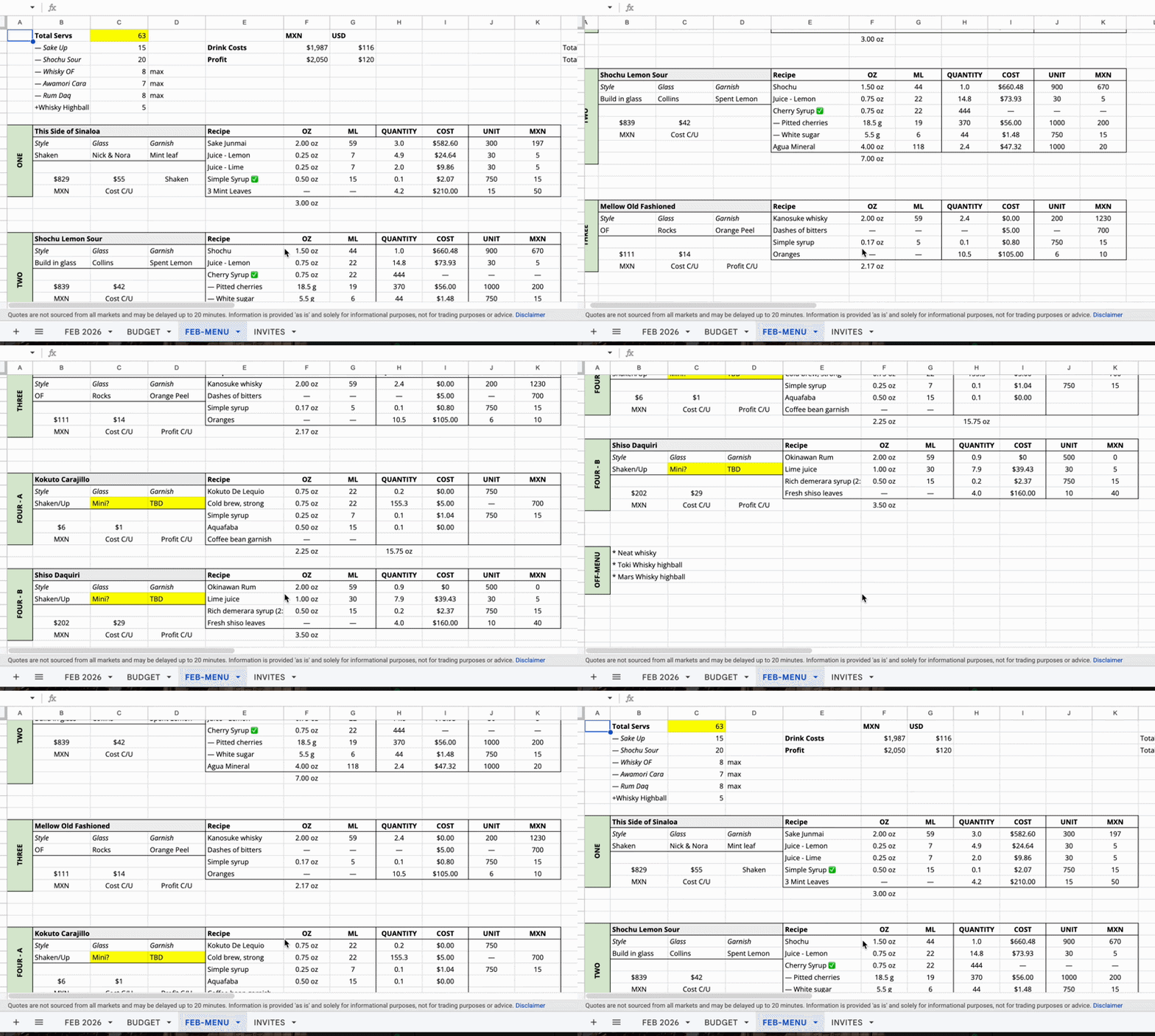
Once I've (mostly) finalized the recipes, I plug them in to a Frankenstein Spreadsheet of my own creation and use a series of formulas and manual conversions to:
- Convert ounces to milliliters, but also "handful" or "barspoon" to grams, etc.
- Check local availability and record cost/unit size
- Calculate rough cost per cocktail to make sure I stay on budget
- Make a list of all the syrups, juices, and shrubs I need to prep
- And create a shopping list
Some of this can be done with formulas, but a lot of it has to be done manually.
For example, this time I had three drinks that used simple syrup. I used formulas to calculate the total syrup I needed and, from there, the total amount of sugar.
But no formula is reliably going to calculate how many lemons I need for x ounces of lemon juice. 😅
Shop for supplies
I usually place a bulk grocery order via Uber Eats or similar to save myself the heavy lifting. (I don't have a car, and there are lots of heavy bottles.)
This also allows me to check stock before placing the order. If a store is out of something I need, I can pivot to another store that (theoretically) has everything.
I inevitably still end up running 2-3 errands for more specialized ingredients. (This time, it was a natural foods store for a specific type of tallow, and a Japanese grocery store for shiso.)
Printing
I don't have a printer so I print menus and signage at a local Office Max.
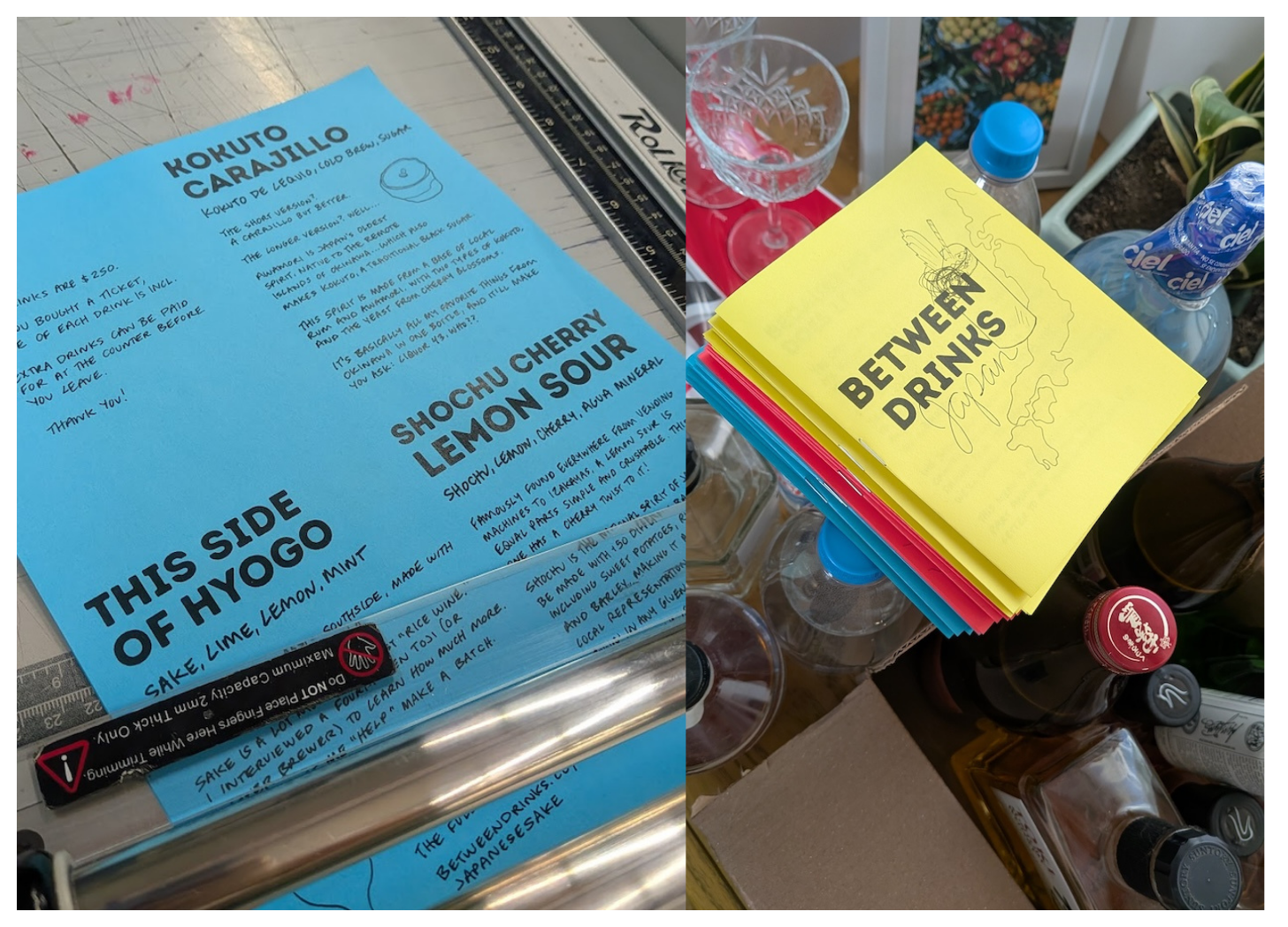
My menus are usually a simple one-pager made in Canva, but I wanted to take it up a notch this time. The whole pop-up was inspired by the podcast so I wanted to include a little more context about the spirits and the drinks, as well as a CTA to listen to the related episode under each drink.
I ended up printing a little handwritten zine that I then cut, folded, and stapled at home. Each one only cost 8 pesos (or ~50 cents) to print, but it definitely took a few hours for me to write/design so jury's out on whether I'll do it again.
Early prep & packing
I break all my prep into week-of and day-of prep.
The first group is mainly syrups because they have a longer shelf life. This time I needed three different ones—simple syrup, demerara syrup, and cherry syrup.
At the same time, I like to start packing up glassware—which is the bane of my existence.
My venues don't normally have glasses so I bring anywhere between 50-100 each time and they are a bitch to clean, pack, and transport. Especially because, after an event, I have to clean, pack, and transport all over again. It's my least favorite part!
Then there's the standard bartender stuff (jigger, shaker, bar spoon) but also things that a bar would normally provide—bar mats, towels, dump buckets, etc.
Plus, the spirits themselves. Anything that doesn't have to be refrigerated gets packed early so I don't have to worry about it on the day.
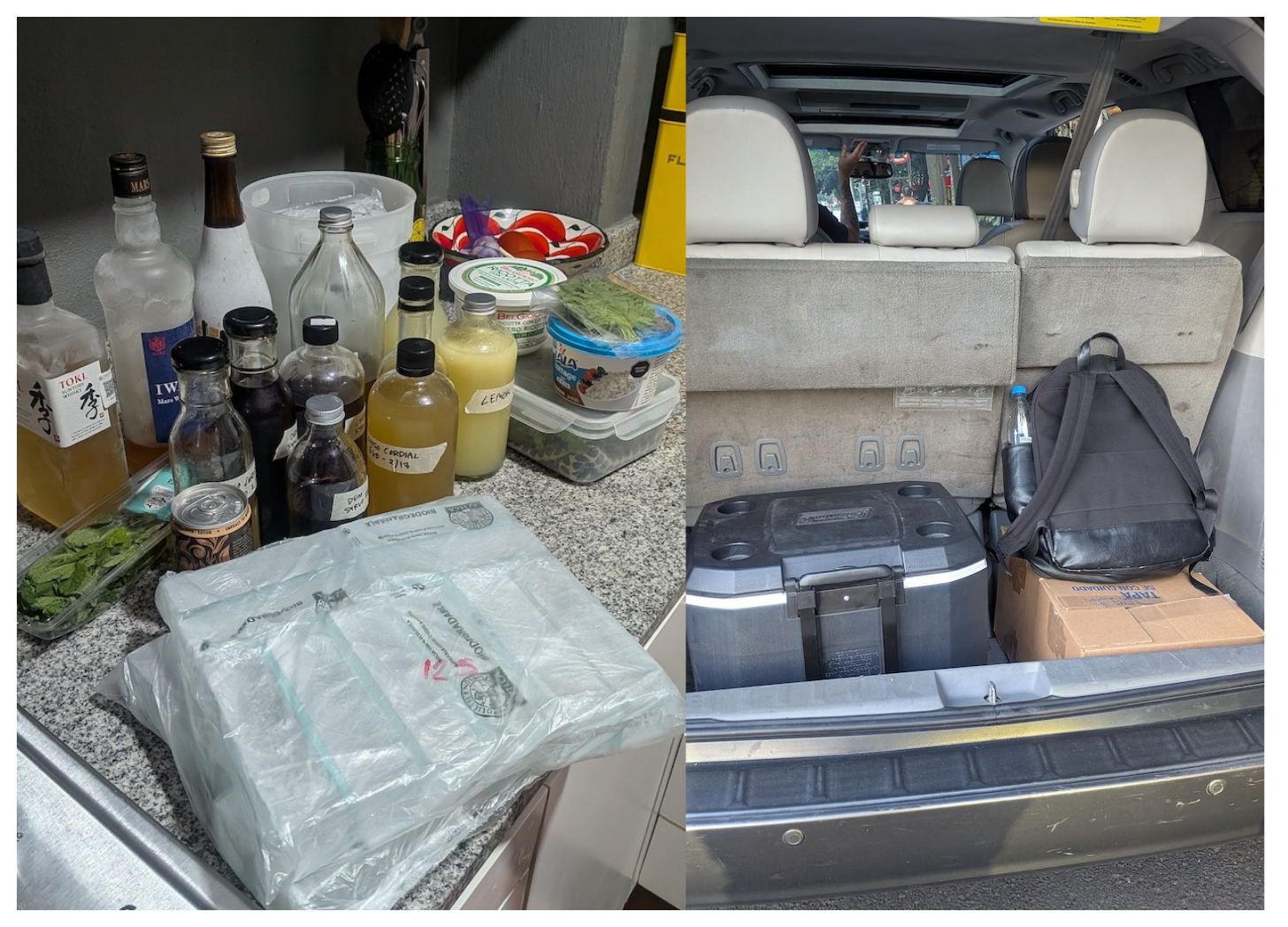
The perishable stuff that gets packed last minute, and (most of) the final haul.
Final prep & set-up
The morning is always reserved for menu-specific errands. I made a another stop at the Japanese grocery store for fresh shiso (mine had wilted 😔) and my ice guy dropped off a box of cocktail ice.
Then I spent the afternoon finishing the prep. This time, I made a shiso-lime cordial that was a last-minute pivot, and juiced a shit ton of citrus. I also prepped garnishes like fresh mint, shiso, orange peels, etc.
And, finally, I loaded up my cooler with the cocktail ice, syrups, garnishes, etc. at the last possible minute.
A friend met me at my apartment to help me load all my stuff into the back of an Uber. And, from the back seat, I hit order on another delivery of more ice, sparkling water, and Japanese beer. (Because it doesn't make sense to get that stuff delivered to my place, only to have to move it again.)
Once I got to the venue, I unpacked, got set up, and was literally pouring ice into my cooler when my first regulars walked-in.
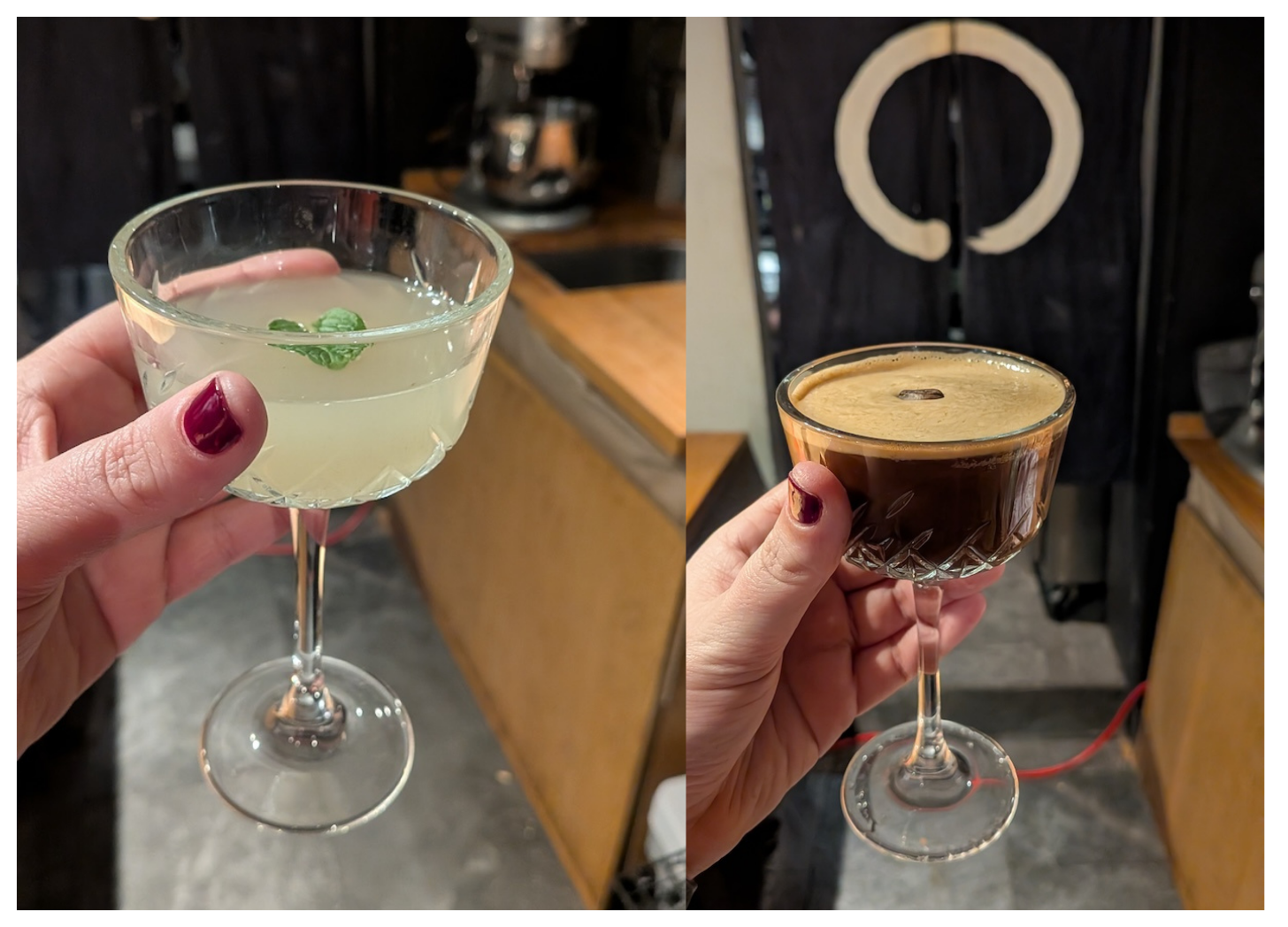
First and last drinks of the night - This Side of Hyogo (a sake Southside), and a Kokuto Carajillo
During the event
I don't work with a barback because, until recently, I couldn't afford one. Which means I'm usually in the weeds from start to finish. And I mostly like that! It's fun, if a little messy.
I knew this pop-up was going to be busier than usual so I did enlist my friend Nikki to help this time. She greeted and seated people, helped them pay, and even washed some glassware when I ran out. (I could not have done this volume without her so, hey, maybe it is time to rethink the barback...)
Once I ran out of signature cocktails, I did a last call for whisky highballs, neat pours, and "kitchen sink" cocktails. People lingered to sip on those for the hour or so that it takes for me to clean up.
And then it's back into an UberXL for me, my cooler, and all my glassware...
xo,
Caro