"There's no festival. There's a war."
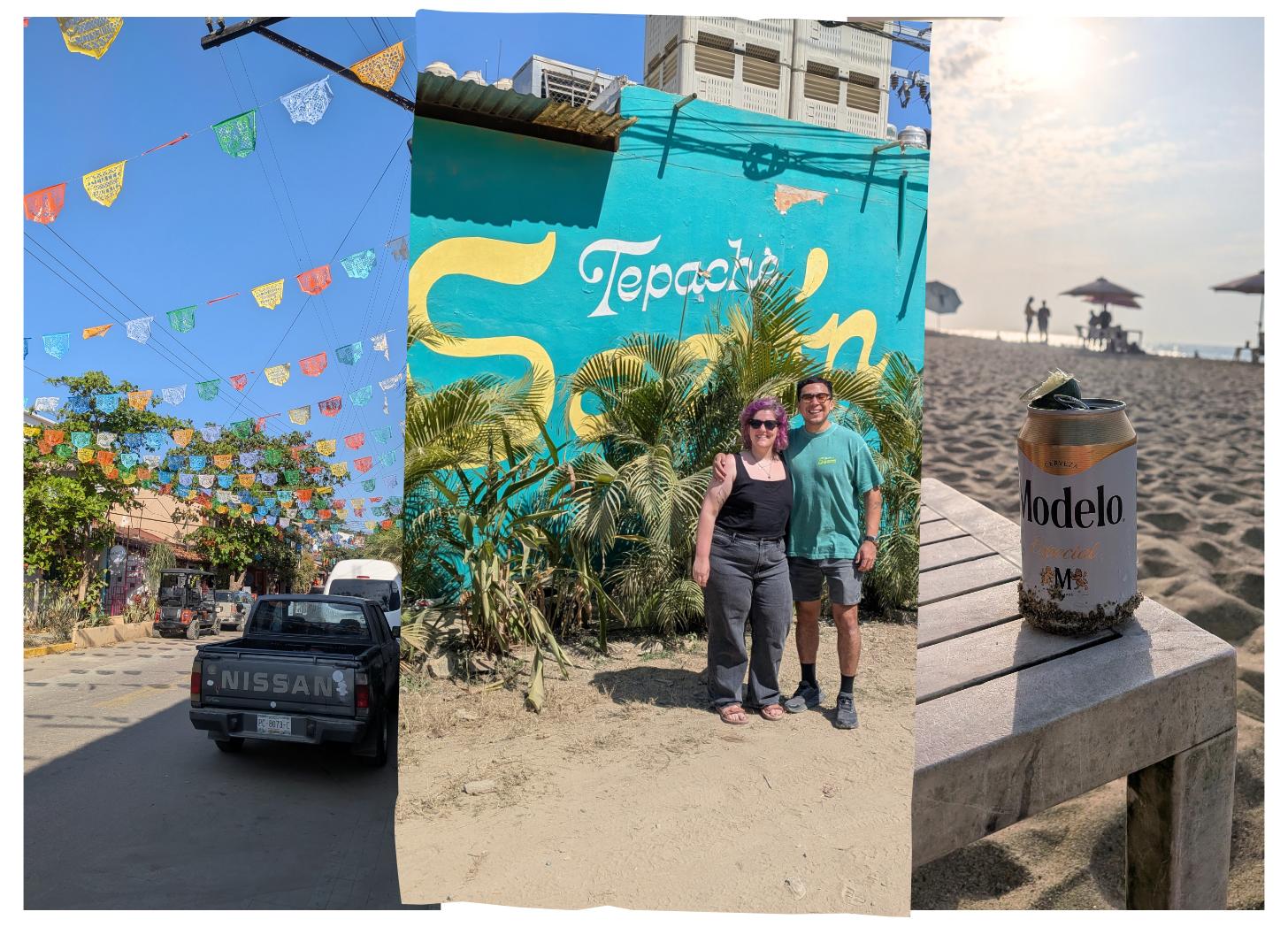
We were getting out of Seb's jeep in front of our hotel after spending the morning at Tepache Sazón.
That's what this newsletter was supposed to be about—tepache, a traditional (and IMO underrated) Mexican beverage made from fermented pineapples, the craft brand doing cool stuff with it, and San Pancho, the little town of a thousand people that they do it all in.
My friend Rhi and I took the short trip up to Nayarit last Saturday with plans for a two-day trip—enough time to see the brewery, spend a few hours on the beach, walk around town, and get some fresh air.
Only Sunday, things took an unexpected turn.
After touring Sazón and trying all the tepache on offer, Seb offered to drop us at our hotel. He was headed to a local musical festival that Sazón was sponsoring, and we were making plans to stop by there later. When, suddenly, a woman walking by (seemingly another tourist or expat) chimed in: "No hay una festival. Hay una guerra."
Una guerra? A war? That can't be right....
I was sure we misunderstood but she didn't seem to have another way to say it, and I was so surprised that I didn't clarify we spoke English.
She kept walking and we all looked at each other—part confusion, part trepidation—but ultimately shrugged and continued our goodbyes.
In the hindsight, maybe this was a crazy reaction to have but it didn't feel like it at the time. We had just driven through town. There were plenty of people out! Seb didn't see anything amiss, and there was no way a war broke out in this tiny town.
Rhi and I went inside the hotel and this is where we made our mistake: we loitered.
We laid on our beds, dicked around on our phones, and said we'd leave in ten when a nearby restaurant was scheduled to open. But while we were chilling, everything was closing.
The news hadn't hit our feeds yet, but it was hitting locals'. People were lining up for groceries, restaurants were selling off the last of their food.
By the time we walked to the main street a half hour later, there was nothing left. And when we got back to the hotel, the staff was gone and all the other guests were laying by the pool for lack of anything better to do.
"Shelter in place" was the advice. We could do that in our hotel room, or by the pool and we all apparently decided on the latter.
But let me be clear: I didn't feel unsafe at any point.
I was worried how long Rhi and I could make a single banana muffin and one can of tepache last if things didn't reopen.
I was anxious about how long we'd be stuck there.
I was worried about people who were actually in the the thick of things in PV and Guadalajara. And I was angry at the lack of helpful statements from anyone important.
But I didn't feel unsafe.
Eventually, Seb let us know about a place that was going to reopen and we went rushing towards it.
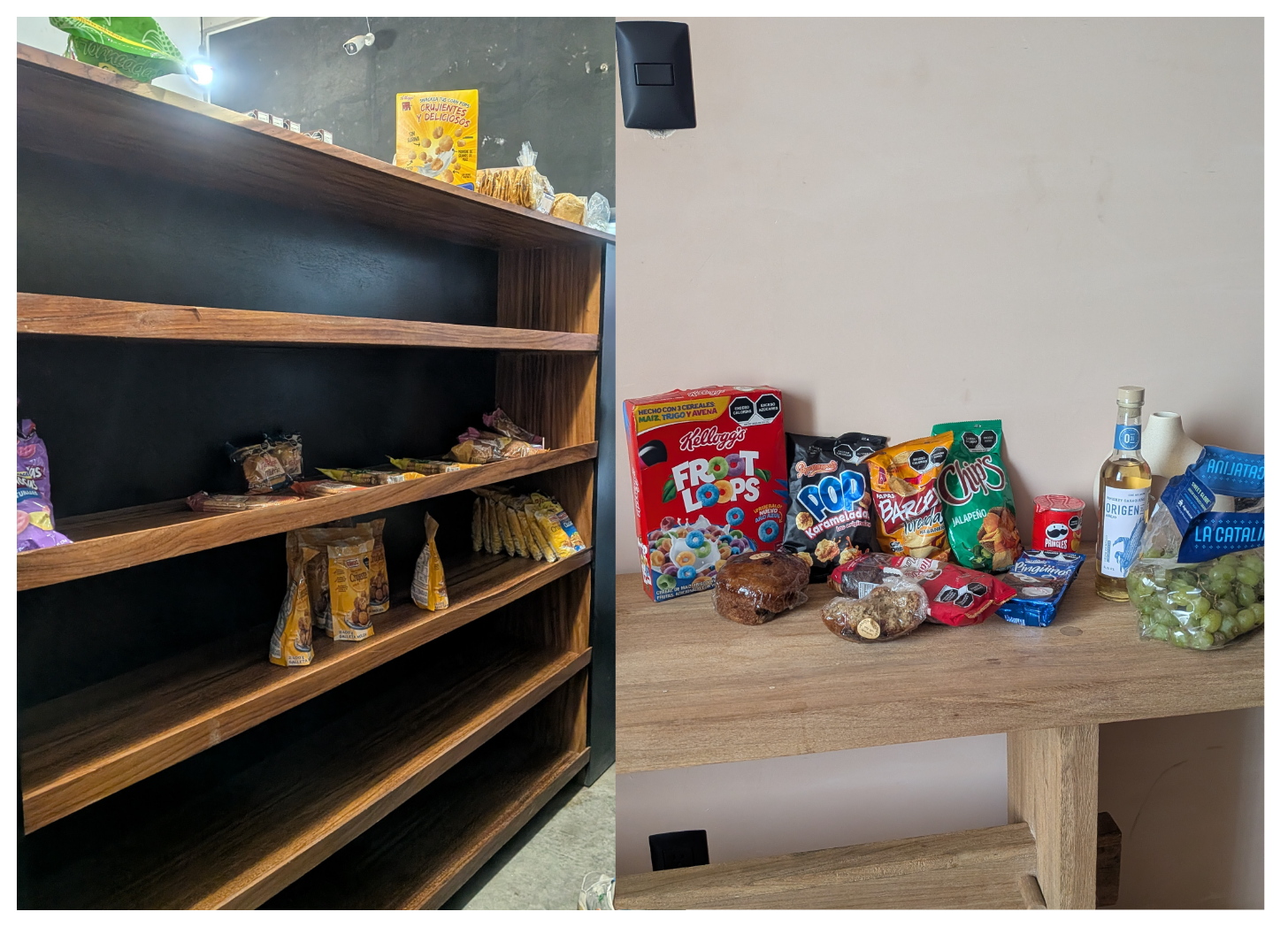
It turned out to be an upscale mini mart intended for surfers, and the line wound through every aisle and out the door. You had to get in line without knowing what they had, which I gladly did while Rhi went searching for a backup option.
Every twenty minutes, I'd turn a corner, grab whatever I could from that aisle, and then balance the haul in my arms as we all slowly made our way to the counter.
The mood was tense but everyone was quiet and calm. There was no pushing, shoving, or overbuying. And I was reminded of how many headlines I've seen about Americans fighting over milk or toilet paper before a mild snowstorm.
Back at the hotel, I dumped our haul on the table in our hotel room and looked at a pile of chips and cookies, some bottles of water, and a sad bag of grapes.
We spent the night in our respective beds, making dark jokes, getting our only valuable news from social media, and answering increasingly frantic texts from friends and family.
The next day, we decided we should venture out to find more food in case it was our only chance. What if the last of the stores truly did get cleared out and we were stuck for days? Were the trucks that refill the shops even able to get on the road?
We immediately found an open cafe, and then a minimart, a restaurant... and by the afternoon, more than half the town had reopened.
When we got back to the hotel, the staff had returned and was doing damage control. They assured us that the roads and airport in Puerto Vallarta had reopened. It was safe to leave, but we didn't have to check out if we didn't want to.
We decided that we'd rather wait another day before braving the roads and inevitable chaos at the airport. And we quickly booked taxis and flights for the next day while they were still available... and then we went to the beach.
That's how fast things changed in just 24 hours.
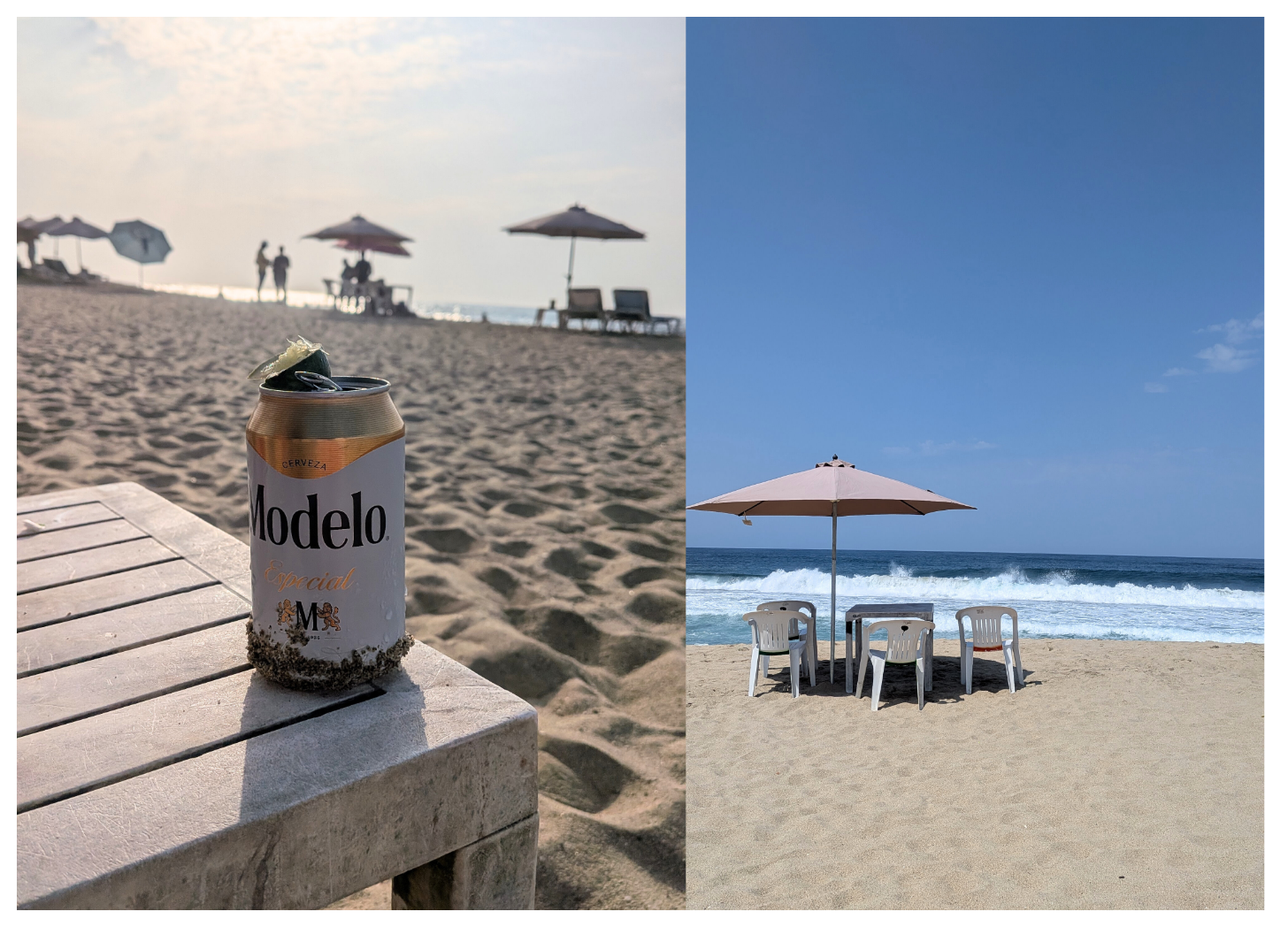
We went from rationing a banana muffin and sharing news with strangers to drinking beer on a beautiful beach. We ordered beers from a guy named Luis and catcalled a group of friendly Chilangos who were taking beach selfies for their dating profiles.
And maybe this is just travel now?
You can blame it on Mexico being "Mexico" (and fuck you, if you do) but this isn't isolated to narcoterrorism. I could have went to Minneapolis last month, or New York last week. I could've been in Bangkok when an unprecedented pandemic hit in 2020. (Oh, wait...)
Between extreme weather, political turmoil, actual war, and then the truly unpredictable... there are increasingly no guarantees anywhere.
During my endless social media scrolling last weekend, I came across a guy who said something like, "Welp, need another place for my birthday trip. Mexico City is off the table for at least a year now, no question."
Setting aside the flippancy and shocking lack of self awareness... Mexico City had no incidents. It's a seven hour drive from Guadalajara, and more than eleven from PV.
It's like saying, "Oh, damn, I guess I can't go to California now because of something happening in Chicago." But that's exactly what people are doing.
I really do respect that everyone has their own risk tolerance, but sometimes cancellations feel like grasping for a false sense of control. Because the odds of CDMX having trouble months from now is probably not that much higher than whatever place you reroute to... or stay behind in.
At an event I was bartending this weekend, a couple foreigners from Austin told me that a few people in their group decided to stay behind because they didn't feel safe coming to CDMX. We shrugged and said semblance of, "Fair."
Hours later, I looked down at my phone during a lull and saw a news alert about the mass shooting there.
[]
We all need to be prepared that travel is different today.
The world feels more volatile, sure, but our desire to go "off the beaten path" also leads us to places that don't have the infrastructure to absorb disruptions in the same way. The companies responsible for getting us there and back care less and less. And the way we share news (and misinformation) has changed dramatically even in the last year.
Previously, this two-day ordeal in northwestern Mexico would have died down before it ever went viral. It would have been largely resolved before it ever hit international news, if it ever did at all. There wouldn't of have been the same level of misinformation dramatizing it even further.
That changes the risk calculation for a lot of us, whether we realize it or not, because we're just hearing about way more incidents than we ever did before.
This is especially true for places like Mexico, which has real dangers that I don't want to dismiss, but also unfair stereotypes that make this the type of news that foreigners are eager to believe.
So, here's my take: Go where you want but understand that shit happens everywhere and don't pretend to be an expert on local realities when it does.
And maybe pack a few protein bars.